


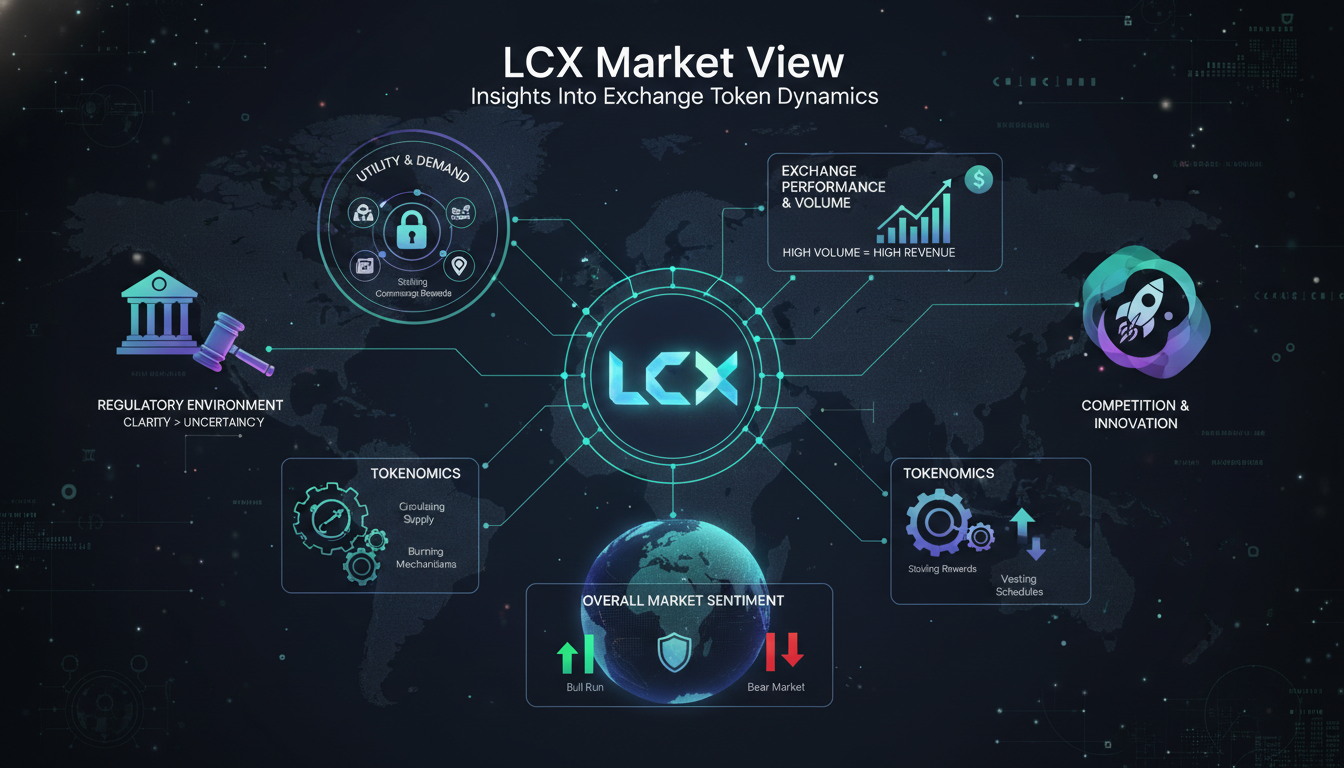
LCX Market View: Exchange Token Dynamics is about how the LCX token behaves in response to market trends, platform usage, and broader crypto sentiment. It looks at supply-demand shifts, trading volume, utility, and how LCX compares with other exchange tokens. This snapshot gives you clear insight into what moves LCX and why it matters now.
Understanding Exchange Tokens and LCX Basics
Exchange tokens are digital assets tied to crypto platforms. They often serve roles like fee discounts, staking rewards, governance voting, or revenue sharing. LCX has similar uses—trading fee rebates, staking perks, and sometimes early access to new listings.
Because of these functions, demand for LCX often aligns with platform activity. When LCX usage boosts, supply tightens, and price tends to follow. On the flip side, if usage dips, supply might increase via unstaking or sale, putting pressure on price.
The Supply-Demand Push and Pull
LCX token dynamics depend heavily on what users actually do with it:
- When traders stake LCX for benefits, supply in circulation tightens. Fewer tokens available often mean upward price movement.
- If parts of LCX are used for fee rebates or burned, that reduces circulating supply further.
- Conversely, rewards or unstaking can release tokens back into the market, easing supply and potentially cooling prices.
These shifting flows create dynamic liquidity. The more active the LCX ecosystem—staking, trading, liquidity mining—the more pronounced the effects.
Trading Volume, Market Sentiment, and Token Momentum
LCX price moves also react to broader crypto trends. When markets rally, even exchange tokens like LCX can ride demand waves. In contrast, bearish phases may see traders unloading lesser-known tokens first, including LCX.
Trading volume is a key indicator. A sudden spike in LCX volume might suggest new listing excitement or hype. Sustained volume gains often point to deeper usage growth or compelling utility updates. Watch for pockets of unusually high trading; those episodes often precede short-term rallies.
How Utility Drives Value: Fees, Access, and Rewards
Real-world utility gives LCX foundational support:
- Fee discounts lower traders’ costs, boosting use.
- Staking programs that offer enhanced access (like early token drops or exclusive pools) encourage locking up LCX.
- Introducing new use cases—maybe governance decisions or loyalty schemes—can spark renewed interest.
Each added utility layer nudges the token’s role away from speculative and toward functional. With more at stake, LCX can show greater resilience in choppy markets.
Relative Performance: LCX vs Other Exchange Tokens
To understand LCX better, it helps to compare it with peers like Binance Coin (BNB), FTX Token (FTT when it existed), or smaller exchange tokens. A few key differences stand out:
- Larger exchange tokens often benefit from stronger brand trust and liquidity.
- LCX might lag in volume or market cap, but that also means more upside potential if utility or adoption expands.
- Smaller tokens can be more volatile; gains—or losses—can be sharper. That unpredictability can be both a risk and an opportunity.
Real-World Example: LCX Response to a New Feature Launch
Say LCX introduced a new staking tier offering extra airdrop rewards. Traders might rush to stake their tokens, reducing supply. At the same time, anticipation builds for the airdrop, driving speculative buys. In the week before and after launch, trading volume may spike. Price might rally, then fluctuations follow as distribution happens.
This kind of cycle is fairly common. It underscores a key insight: platform events combined with utility upgrades often deliver the most noticeable LCX moves.
“When an exchange token gets real utility—beyond just trading discounts—the token begins behaving more like a digital backbone than just a coupon,” says a crypto strategist who’s watched smaller tokens for years.
This view reflects how utility transitions a token’s narrative from hype to usefulness.
Key Signals to Track
Monitoring LCX effectively means watching a few critical signals:
- Staking volumes and reward program updates
- Fee rebate structures or burning mechanisms
- Trading volume trends and price volatility spikes
- Broader market sentiment—especially for mid-tier exchange tokens
- New features like governance modules or loyalty rewards
These together form a pulse on how LCX might move ahead.
Conclusion
LCX Market View: Exchange Token Dynamics boils down to one thing—utility-driven flow. When tokens are locked in staking or burned, supply tightens, pushing prices. When new perks roll out, usage jumps, often spurring volume and value. Compare that with similar tokens to gauge risk and reward. Watch supply changes, volume, market mood, and new uses closely, and you’ll better understand LCX’s rhythm.
FAQs
What makes LCX different from other exchange tokens?
LCX distinguishes itself with a focus on staking and real utility perks—not just fee discounts but also potential loyalty or governance features. It’s smaller, so moves can be more pronounced than big players.
Can staking LCX affect its price?
Yes. When people stake LCX to access benefits, supply in the market drops. That tightening can lift prices—until tokens return through rewards or unstaking.
How does trading volume impact LCX?
Rising volume often signals excitement, such as a new feature or listing. Sustained gains usually mean deeper usage growth. Spikes in volume can precede rallies or corrections.
Is LCX more volatile than bigger exchange tokens?
Generally, yes. Smaller market cap and less liquidity mean sharper ups and downs. That volatility can bring bigger gains—or steeper draws.
What should I monitor to predict LCX moves?
Track staking participation, reward program updates, fee rebate changes, token burns, and volume trends. Also keep an eye on broader crypto sentiment—especially around exchange tokens.
Could LCX add value through governance features?
Definitely. Adding governance or loyalty layers shifts LCX from mere utility to something more foundational. That strengthens both token use and investor sentiment.
(Approx. 860 words)













Leave a comment