


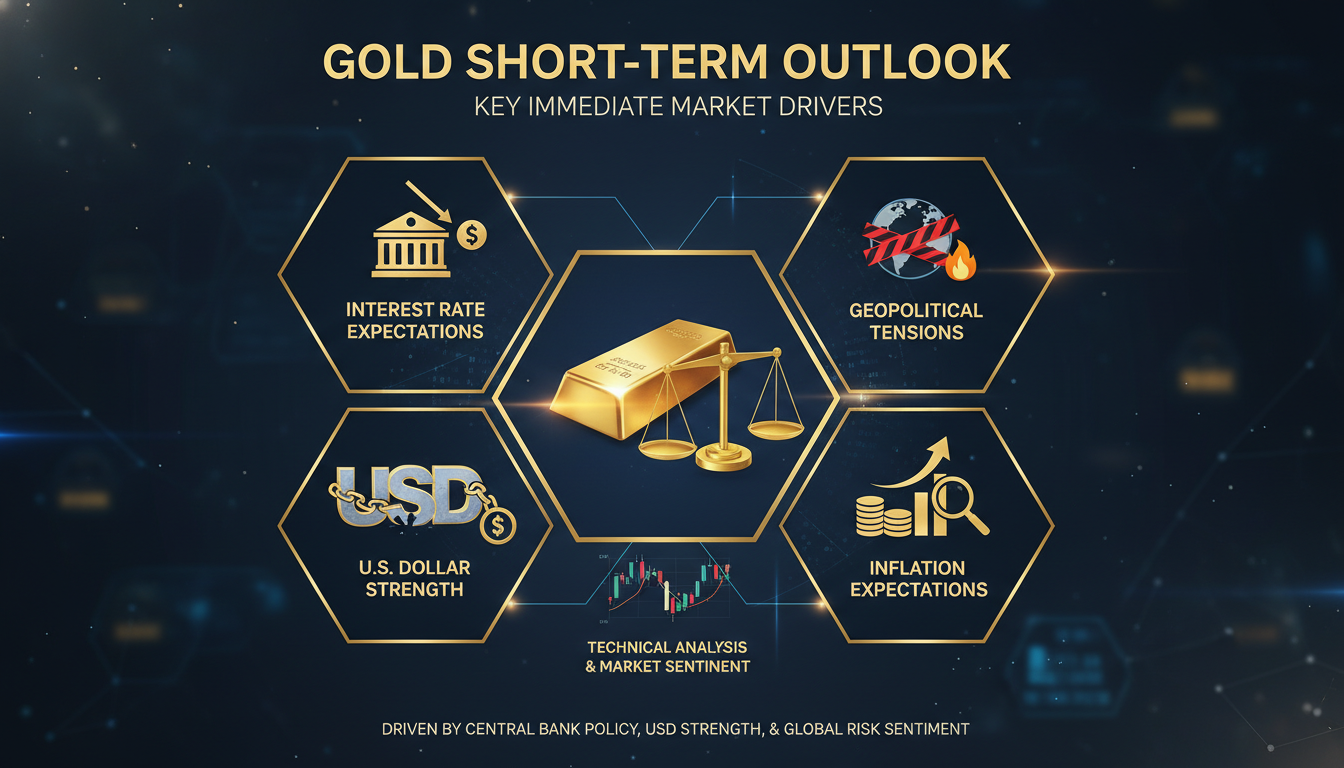
Gold’s short‑term outlook is shaped by a combo of factors—interest rates, inflation readings, geopolitical tensions, and swings in the US dollar. Those are the immediate market drivers that move prices in real time. So, if you’re wondering what’s pushing gold right now, it’s those. Let’s break it down in plain terms, with a bit of real‑world color, and see where things might head next.
Rate Decisions & Central Bank Signals
Central bank moves—especially from the Fed—are the quickest, most potent nudges to gold.
Fed Rate Announcements
When the Fed raises rates, gold tends to slide. That’s because higher rates boost yields on bonds and savings, making gold’s zero-yield less appealing. But when the Fed signals possible cuts, or a pause, gold often perks up.
Take late 2025: whispers of Fed dovishness triggered roughly a mid-single‑digit rally in gold over a couple of days. That’s fast money at work.
Global Central Banks
It’s not just the Fed. The ECB, Bank of Japan, and others also matter. If, say, the ECB leans dovish, gold can get a lift—even if the Fed is steady.
“Investors are watching central bank communications as closely as the data itself. Policy tone matters more than headline rate moves.”
Inflation Data & Real Yields
Inflation remains gold’s best friend—especially when real (inflation‑adjusted) yields fall.
- If inflation comes in hotter than expected, gold can surge on the fear that real yields are eroded.
- Conversely, cooling inflation can pressure gold unless markets expect rate cuts to follow.
For instance, a recent CPI print beat expectations, nudging gold up by a percent or two overnight. In that case, word spread rapidly among traders and the precious metal climbed almost as fast as the numbers hit the screen.
US Dollar Movements
Gold and the dollar move in opposite directions—usually.
Dollar Strength Weakens Gold
When the dollar rallies, gold becomes costlier for foreign buyers, so demand softens. That often drags gold lower in the short term.
Dollar Weakness Bolsters Gold
On the flip side, a weaker dollar makes gold cheaper overseas, boosting demand and pushing prices up.
It’s a seesaw. Spot a sudden dollar slide? Gold might pop. Catch a greenback spike? Gold might droop.
Geopolitical Risks & Market Sentiment
Uncertainty is gold’s ally—often overnight.
Events like regional tensions, sharp equity drops, or headlines about major conflicts can push investors toward gold as a safe-haven.
A sudden flare-up in the Middle East, for instance, has historically sparked a quick gold jump—sometimes a couple percent in just hours—as traders pile in.
Liquidity & Speculative Positioning
Short-term price moves can also come from speculative flows and available liquidity.
- Large speculative positions (think hedge funds or big traders) can force moves if they suddenly unwind.
- Thin liquidity (like during holidays) can exaggerate small trades into big price swings.
This is why, sometimes, gold seems volatile for no obvious news. It might just be positioning, and the lack of deep market depth.
Putting It All Together: A Quick Scenario
Imagine this scenario: The Fed holds rates steady but hints it may pause further tightening. At the same time, CPI comes in hotter than expected. The dollar dips, and tensions flare in Eastern Europe.
- Fed message: opens the door for gold.
- Hot CPI: boosts demand as inflation fears resurface.
- Dollar dip: makes gold more accessible globally.
- Geopolitics: triggers safe-haven demand.
The result? Gold surges—fast. Traders jump in, spec positions magnify things, and volatility spikes in a short space of time. But if one of those factors reverses (say, a calmer Fed tone or cooling tensions), the move could unwind just as swiftly.
Key Drivers at a Glance
- Central bank cues: Especially from the Fed.
- Inflation & real yields: Hot or cold data tilts gold.
- US dollar: Inverse moves matter more than ever.
- Geopolitical shock: Safe-haven flows ignite gold rallies.
- Speculative flows & liquidity: Can amplify or dampen moves.
Why It Matters to You
Understanding these short‑term pulses gives you clarity—whether you’re trading, hedging, or just watching.
- Want to hedge against inflation? Watch CPI and Fed talk.
- Looking for quick trades? Track dollar swings and geopolitical headlines.
- Managing risk? Be aware of spec flows and thin markets.
Strategic Tips for Navigating
- Stay close to central bank signals, not just rates but tone.
- Track inflation surprises, especially core CPI and PCE.
- Watch dollar indexes—they’re often the faster moving dial.
- Keep one eye on global events, especially unexpected crises.
- Mind the context—thin markets amplify moves; don’t be caught off guard.
Conclusion
In short, gold’s short‑term path is steered by central bank tone, inflation surprises, dollar swings, geopolitical flare-ups, and speculative currents. These factors often overlap, creating fast, reactive moves that traders need to stay ahead of. Keep tabs on those signals, and you’ll be more ready to read the market—whether you’re reacting to news or making your own moves.
FAQs
Q: Can gold move sharply even with no obvious news?
Yes. Thin liquidity or large speculative positions can trigger moves without fresh headlines. That’s why it’s essential to monitor positioning and market depth.
Q: Does a Fed rate cut always boost gold immediately?
Not always. The tone matters. If rate cuts signal strong confidence in economic growth, gold might lag. If cuts reflect recession concerns, gold tends to rally.
Q: How much should I track the dollar for gold decisions?
Quite closely. Dollar fluctuations often lead gold moves, making FX data and dollar index trends key early indicators.
Q: Are geopolitical flashes always bullish for gold?
Generally yes, but the duration matters. Short-lived flare-ups spark quick rallies. Prolonged calm often leads to gradual normalization of prices.
Q: What’s the best way to stay updated?
Watch central bank feeds, inflation data, dollar indices, and major news wires. Combine them with sentiment trackers to get the full picture.















Leave a comment