


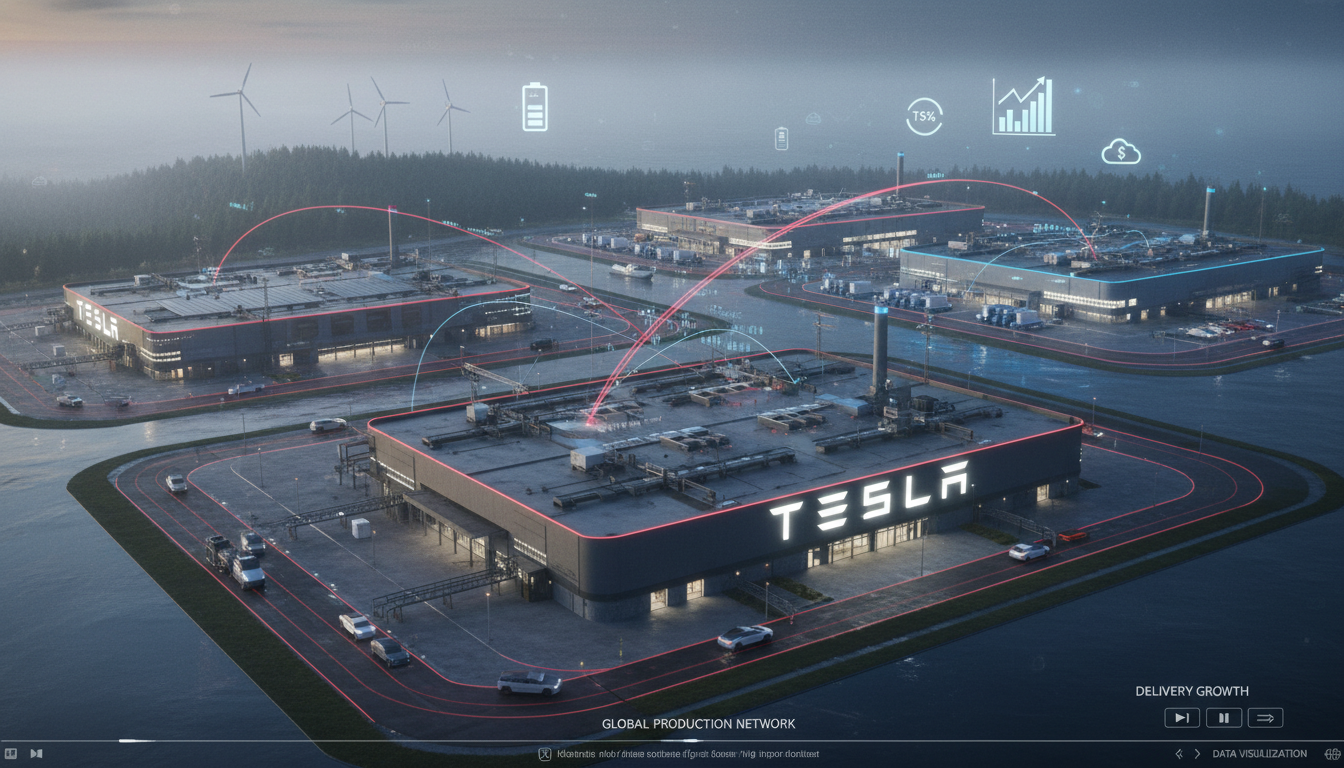
Here’s the quick answer: Tesla’s stock right now is being driven most by its pivot from pure EV sales toward AI, robotics, and autonomy, even as demand in critical regions softens. This shift has created a narrative where investors weigh futuristic ambitions against near-term headwinds.
Why this matters most
Tesla is evolving beyond an auto company. Its robotaxi service, humanoid robots, and Full Self-Driving (FSD) software are rapidly becoming central to how markets value the stock. Investors are watching actual sales and regulatory signals, but more so the delivery of these future-oriented, high-margin businesses.
Why the AI and Robotics Narrative Is So Powerful
Tesla’s transformation into an AI and robotics powerhouse is real and gaining momentum. It’s not just talk—Tesla is sinking capital into actual product rollouts.
- The Optimus humanoid robot is going from prototype to mass production at Fremont, potentially delivering up to a million units annually, with production expected to begin this year.
- The SpaceX–xAI merger (valued at $1.25 trillion) and Tesla’s $2 billion investment fuel investor enthusiasm around AI synergies and potential structural consolidation.
“The narrative shift from EV hardware to software, robotics, and recurring revenue models is a central theme in how investors now price TSLA’s future.”
— Financial analysis on Tesla’s strategic repositioning
Wedbush forecasts a potential $2–3 trillion valuation if Tesla’s AI-driven ambitions succeed, underscoring how much upside hinges on execution.
Autonomy and Robotaxi: A Game-Changing Frontier
“2026 is widely viewed as the ‘show-me’ year for Tesla’s autonomy ambitions.” That’s no exaggeration. Tesla is moving fast:
- Robotaxi services are rolling out in Austin and the Bay Area, with plans to expand further. FSD trials improve disengagement metrics significantly.
- Cybercab, the steering-wheel-free vehicle, is entering pilot production at Giga Texas, with commercial launch aiming for April 2026.
- Optimus robots are now working in Tesla factories and expected to be available outside for purchase by late 2026.
Bulls argue: when scaled, robotaxis could shift Tesla from hardware to high-margin service revenue—massive upside if regulators allow. Bears see significant execution and regulatory risk.
EV Sales: The Foundational Business Is Under Pressure
Tesla’s core remains EVs—75%+ of revenue still comes from vehicle sales. But:
- EV demand is slowing globally. Europe saw sharp January 2026 drops: registrations fell nearly 90% in Norway, 67% in the Netherlands, and 42% in France year-over-year.
- In China, January EV sales were up 9.3% year-over-year but down ~30% from December 2025. Competition from domestic players like BYD, Li Auto, XPeng, and Nio is intensifying.
This slowdown has led to price cuts and lower forecasted deliveries. Some analysts expect 2026 volumes around 1.7–1.9 million units.
Tesla also saw its first annual revenue decline in 2025, falling about 3% to ~$94.8 billion. Yet automotive margins improved to ~17.9%, and Energy & Storage revenue rose ~25.5%—a sign of diversification.
Capital Intensity and Valuation Pressures
Tesla’s transformation isn’t cheap. High spending may strain short-term cash flow:
- Capital expenditures are set to hit ~$20 billion in 2026, up from under $9 billion in 2025.
- Analysts warn that high P/E ratios—some estimates in the 300–400 range—leave little margin for error.
Morgan Stanley downgraded Tesla to “Hold,” citing valuation concerns and execution risks, despite recognizing long-term potential in autonomy and robotics.
Market Sentiment: Bullish Optimism vs. Realism
Sentiment is split wide:
- Bulls bet Tesla is morphing into an AI company with optionality from robotaxis, Optimus, energy and software. Some forecasts range up to $1,000+ per share if everything clicks.
- Bears highlight slowing EV demand, hefty capex, competition, questionable regulatory timelines, and lofty valuations. Detractors warn a “pause then fall” scenario.
Investor sentiment remains highly tied to progress in autonomy milestones and regulatory signals.
Conclusion
Tesla’s stock is a high-wire act: EV pressures are palpable, but the company’s bold pivot toward AI, autonomy, and robotics fuels the upside case. Execution is everything.
If regulatory landscapes open and Robotaxi/Cybercab/Optimus take off, TSLA might justify its premium multiples. But delays, execution gaps, or continued underperformance in core regions could spark a sharp revaluation.
In short: Tesla’s future hinges on both tomorrow’s dreams and today’s realities.
FAQs
What’s driving Tesla’s stock momentum right now?
Tesla’s momentum is being fueled by its AI and robotics strategy—robotaxi services, Optimus robot ramp, and FSD improvements—especially as EV sales growth slows.
Are EV sales still important for Tesla?
Absolutely. EV sales still represent the majority of revenue. Slowing demand in Europe and China is a core risk that keeps the stock sensitive to quarterly delivery figures.
How risky is Tesla’s heavy spending into AI and CapEx?
Quite risky. With $20 billion in 2026 CapEx planned, execution must succeed for returns to justify the spend and high valuation. Failure to deliver could pressure cash flow and sentiment.
Could Tesla become a pure-play AI company?
Potentially. If robotaxis and Optimus succeed commercially, Tesla may be viewed as an AI & robotics platform, not just an automaker—shifting valuation frameworks entirely.
What are key milestones to watch in 2026?
Watch regulatory approval and scaling of robotaxi services, Cybercab production ramp, Optimus commercialization timelines, and whether energy/storage businesses continue gaining traction.
Why is Wall Street divided on Tesla?
It’s a classic high-risk, high-reward case. Bulls see a transformative AI/robotics shift; bears see shaky fundamentals, high competition, and lofty valuations—all depending on flawless execution.

















Leave a comment