


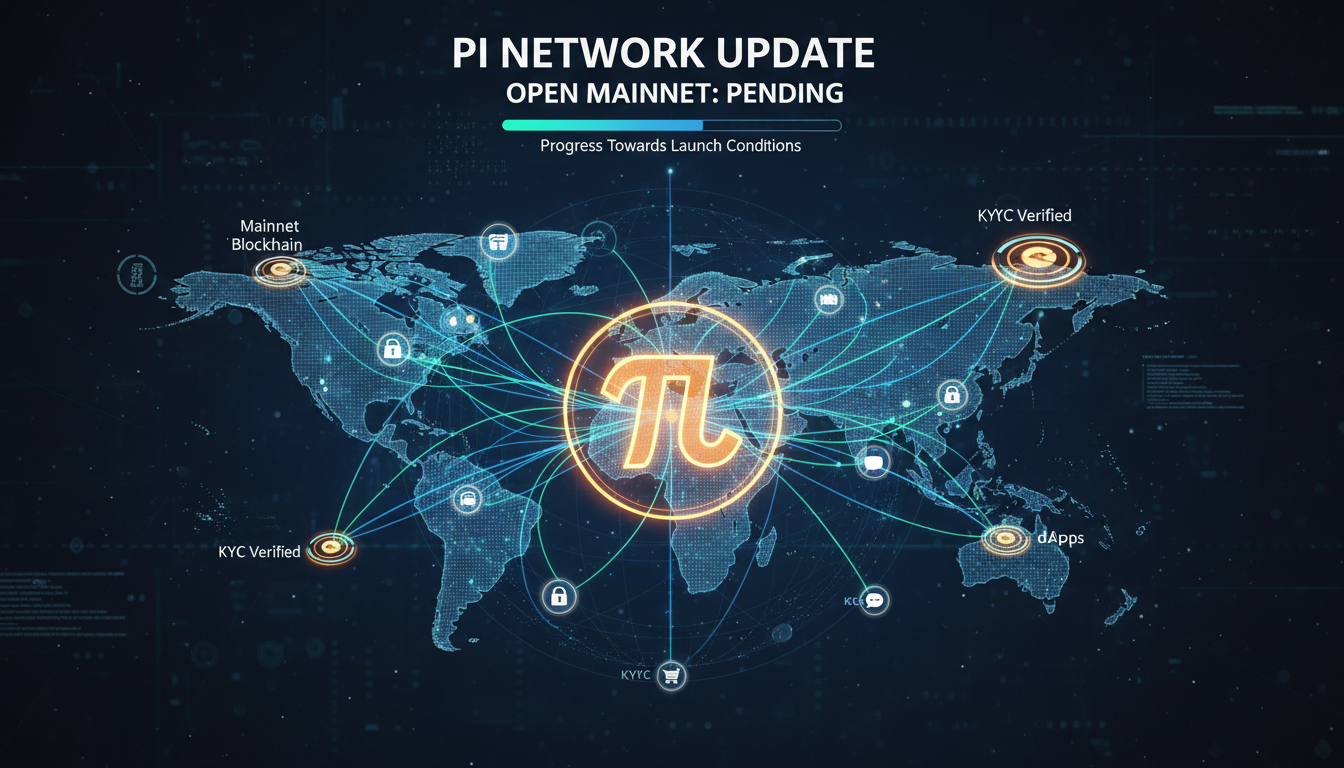
Yes — the Pi Network’s Open Mainnet has officially launched on February 20, 2025, at 8:00 AM UTC, marking the transition from a guarded, internal system to an open, interoperable blockchain ecosystem. This progression enables Pi coins to interact with external platforms, wallets, exchanges, decentralized applications, and real-world utility.
The Road to Open Mainnet
Early Phases and Controlled Development
Pi’s journey began in March 2019 with a mobile-friendly Beta phase focused on user adoption and social consensus-building. By 2020, the testnet phase emerged, prioritizing infrastructure and consensus testing. In December 2021, Pi transitioned to an Enclosed Mainnet, permitting Pioneers to complete KYC and migrate Pi balances in a secure, closed setting while developers built ecosystem tools and apps.
Scaling KYC, Migration, and App Development
In late 2024, Pi passed crucial thresholds: over 18 million users completed KYC verifications, and over 10 million Pioneers migrated to Mainnet. This outpaced the originally set targets, supporting the shift to an open phase. By early 2025, over 100 Mainnet or Mainnet-ready apps were in development or deployed.
Launch on February 20, 2025
On February 20, 2025, Pi officially removed its internal firewall at 8:00 AM UTC, enabling external connectivity and allowing anyone to run nodes, integrate apps, and interact with the blockchain freely. This pivotal step ushered in a new era of accessibility and utility for Pi.
What the Open Network Means for Pioneers and Developers
Expanded External Connectivity
With the firewall lifted, Pi now enables external wallets, exchanges, APIs, and dApps to interact with the blockchain. Enterprises and developers can securely connect compliant systems, and users can move Pi beyond the closed ecosystem into broader usage.
Enhanced Ecosystem Engagement
Existing dApps built within the Pi platform—like Pi Browser, Fireside Forum, Pi Wallet, and Map of Pi—are now accessible for external transactions. Previous events like PiFest in 2024 already demonstrated Pi’s local commerce utility, involving tens of thousands of merchants and nearly a million transactions. This functionality deepens with Open Network access.
Real-World Transactions and Compliance
Participating Pioneers require KYC, and businesses need KYB verification to ensure safe ecosystem interactions. This focus on identity-based compliance is unique for a layer-1 blockchain, enabling trusted exchanges between verified individuals and businesses.
Market Reaction and Crypto Community Reflections
Trading and Price Movement
Post-launch, Pi has seen early trading activity. Reports cite exchange deposits exceeding 1 million Pi tokens and price fluctuations between roughly $0.80 and $2.10—demonstrating early volatility typical of emerging tokens.
Community Sentiment
Reactions within the Pi community reflect both excitement and cautious observation. Reddit users noted that open trading has begun, emphasizing that concerns over a “closed mainnet” were resolved with launch, though some still await official communication from the core team. Others highlighted ongoing price swings, noting comparisons with other blockchains’ early growth stages.
Insights from the Founders
“Pi is the world’s first crypto that users can mine for free on mobile phones which has helped, and will continue to help, bring crypto to the hands of millions of people around the world through accessibility.” — Dr. Nicolas Kokkalis, co‑founder and Head of Technology
“Open Network is the culmination of our endeavors to build and launch a fully developed and inclusive worldwide peer-to-peer ecosystem… with the focus of it to becoming the most widely used cryptocurrency.” — Dr. Chengdiao Fan, co‑founder and Head of Product
Their remarks underscore Pi’s mission: accessibility, inclusion, utility, and a truly peer-powered ecosystem.
Summary and What Comes Next
The Pi Network’s Open Mainnet launch on February 20, 2025, marks a fundamental turning point—moving from a closed sandbox to a fully interoperable blockchain environment. Pioneers can now use Pi in broader contexts, developers have new external integration opportunities, and businesses can interact with verified users in a compliant ecosystem.
Going forward:
- Pioneers should ensure their KYC status is finalized and migrate any remaining balances to Mainnet.
- Developers can expand app functionality to external integrations and expand user engagement.
- Businesses may consider integrating Pi-based payments, exploring Web3 commerce avenues.
- Analysts and observers will monitor token performance, exchange listings, and governance shifts—especially as Pi evolves toward greater decentralization.
This launch is a milestone, but how the network and token behave in the coming months will define Pi’s real-world impact and adoption trajectory.
FAQs
Q: When did Pi Open Mainnet go live?
It officially launched on February 20, 2025, at 8:00 AM UTC, ending the enclosed phase and enabling external connectivity.
Q: What changed with the Open Network?
External wallets, exchanges, apps, and nodes can now interact with Pi’s blockchain. The network supports real-world transactions, compliance via KYC/KYB, and expanded developer capabilities.
Q: Do I need to complete anything new after launch?
Pioneers should confirm KYC status and migrate any pending balances. For businesses, KYB verification is required to interact fully with users on the Pi blockchain.
Q: Is Pi being traded now?
Yes. Exchange deposits are live and Pi tokens are trading, with early price volatility common in new crypto listings.
Q: How many apps are available on Open Network?
Over 100 Mainnet or Mainnet-ready apps were active or in development at launch, accessible via the Pi Browser and ecosystem interface.
Q: Why is identity verification important for Pi?
Pi leverages KYC and KYB to enable trusted, compliant peer-to-business and peer-to-peer transactions, which is rare for layer-1 blockchains but essential for real-world utility.





















Leave a comment