


Introduction
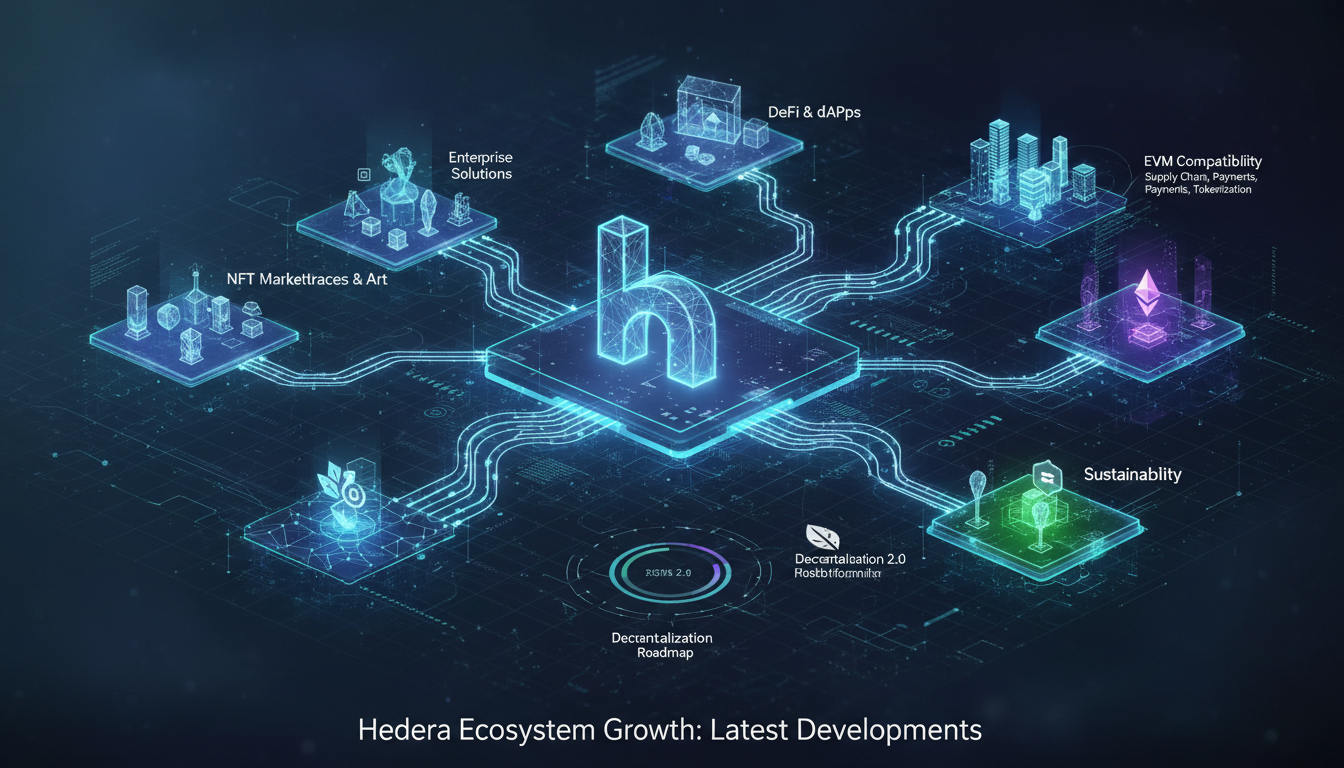
Hedera (HBAR) is making real waves with governance restructuring, ETF momentum, AI integration, and enterprise adoption—but what’s next isn’t about hype; it’s about trust, real‑world deployment, and strategic infrastructure that could shape its 2026 trajectory.
Institutional Upgrades and Governance Reimagined
Hedera has retooled its governance model to enhance clarity and enterprise alignment. In 2025, the HBAR Foundation rebranded as the Hedera Foundation, focusing on ecosystem growth, while the Hedera Council took on protocol governance responsibilities. Leadership appointments like Charles Adkins (CEO of the Foundation) and Tom Sylvester (President of the Council) have sharpened institutional focus.
Meanwhile, the Foundation announced early in 2026 that it’s streamlining operations to boost market efficiency and infrastructure support, while maintaining loyalty to its grantees and upholding the Council’s governance independence.
This evolution reflects a nuanced balancing act: preserving decentralized ethos and developer-first tools like Asset Tokenization Studio and Stablecoin Studio, while zeroing in on long-term industry impact.
Institutional Traction & Tokenization in Motion
Hedera is no longer theoretical—it’s powering tokenized assets and real‑world use cases. In 2025, it facilitated UK gilt collateral traded by Lloyds Banking Group and Aberdeen, pilot rollouts of Australia’s Digital Dollar, and supply chain tracking via B4ECarbon and HashSphere.
The Canary Capital spot HBAR ETF, listed in October 2025, now holds roughly 1% of total HBAR supply—stimulating wallet growth (up nearly 190%) and boosting on-chain transactions by nearly 386%.
Activity doesn’t stop there. Platforms like Archax, Tokeny, Ownera, and Swarm are tokenizing regulated assets, including money market funds tied to major names like BlackRock and Fidelity.
These developments underscore that HBAR isn’t just about speculative trading—it’s underpinning financial rails for tokenized instruments, a basis for long-term utility-driven demand.
AI, Trust Layers, and Regulatory Guardrails
What sets Hedera apart is the layer of trust baked into AI and compliance. Through the “Prove AI” framework and verifiable compute models, Hedera enables immutable audit trails for AI decisions—think of it as a blockchain black box for AI operations.
This matters because global regulation is tightening. The EU AI Act (effective August 2026) and state-level rules in the U.S., such as California and Colorado , mandate traceability—making Hedera’s offerings imminently relevant.
Technical Milestones and Developer Momentum
Beyond governance and enterprise use, Hedera is doubling down on technical robustness. The January 2026 mainnet upgrade improved AI integration, enterprise features, and system stability.
At the developer level, Hedera is rolling out tool enhancements like the Asset Tokenization Studio and HashSphere, alongside SDK support—recently releasing v0.47.0 with Swift 6 compatibility.
Upcoming Hedera DevDay in Denver , in collaboration with ETHDenver, indicates a push to bring builders together alongside platform updates, deep tech sessions, and ecosystem showcases.
Price Dynamics: Support, Resistance, Forecasts
Technically, HBAR is navigating key levels. As of Feb 1, 2026, support sits at $0.1306–$0.1307 with deeper risk at $0.12, while resistance runs $0.1315–$0.1350. A breakout above $0.135 could push HBAR toward $0.15–$0.16—a meaningful ~15% move.
That technical picture sits atop a shifting ETF flow—late January saw $3.31M inflows even as spot markets saw short-term outflows—hinting at institutional stacking. A breakdown below $0.114, however, risks long liquidations and decline toward $0.10.
AI-driven forecasts vary. Finbold’s models suggest short-term rangebound movement near $0.115, with upside potential of +6% or downside of –6%, depending on sentiment.
Longer-term, forecasts range:
– Conservative: $0.2–$0.5 by end‑2026, median around $0.35, assuming ETF approvals and RWA expansion from $10B to $15–$20B.
– Bullish: $0.35–$0.55 if on-chain activity accelerates, inflation slows, and DeFi/NFT projects rise.
– Very Bullish: $0.70–$1 if sharding kicks in, dApp usage surges, and institutional adoption takes off.
But there is downside if adoption stalls, council friction emerges, or macro headwinds bite—leading to stagnation in the $0.10–$0.14 range.
2026 Outlook: What’s Next for HBAR
All these threads weave into a clear narrative: Hedera is positioning itself as the trust infrastructure behind AI, tokenization, and institutional blockchain adoption. With over $10B in RWA settlements so far and a governance model that scales with enterprise needs, Hedera could emerge as a foundation for the emerging digital economy.
If ETF momentum continues, DeFi/NFT developers ramp up, and regulatory clarity fosters institutional participation, HBAR could stabilize in the $0.2–$0.5 zone by late 2026. But that hinges on execution across tech, policy, and adoption fronts.
One Reddit observation captures it well:
“Canary Capital’s HBAR ETF… now holds 1.1% of the circulating supply… USDC on Hedera shot up 63%… We’re one week away from the Jan 15 Senate markup…”
That mix—ETF, liquidity, regulatory clarity—is the crucible where HBAR’s 2026 trajectory will be forged.
Conclusion
Hedera’s momentum heading into 2026 rests on substance, not showmanship. Through governance refinement, enterprise-level tokenization, AI‑trust systems, technical upgrades, and ETF-backed liquidity, it’s building a foundation rooted in trust and real-world utility. HBAR’s short-term price hinges on clearing key technical zones, but long-term upside depends on regulatory clarity, developer mass adoption, and continued institutional integration. The next chapters for Hedera won’t be about token hype—they’ll be about building authoritative infrastructure in the digital economy.
FAQs
What makes Hedera different from other Layer 1s?
Hedera blends a council‑governed model with enterprise‑friendly tools, real-world asset tokenization, and AI governance layers—positioning it as a trust-first infrastructure rather than just a network.
Will the HBAR ETF change market dynamics?
Yes, the Canary Capital HBAR ETF now holds about 1% of supply. That institutional backing has already boosted wallet counts and on-chain activity, even if spot market sentiment remains mixed.
How is Hedera contributing to AI transparency?
Hedera enables verifiable audit trails for AI decisions through immutable ledger entries—vital for compliance under regulations like the EU AI Act and new U.S. transparency laws.
Is HBAR’s short-term price poised for a breakout?
Technically, HBAR sits at support around $0.13, with resistance near $0.135. A break above that could lift it toward $0.15–$0.16, while a fall below $0.114 risks slide to ~$0.10.
What could HBAR’s price be by end of 2026?
Forecasts vary: conservative estimates settle around $0.2–$0.35; bullish scenarios push closer to $0.5; explosive adoption could send HBAR near $1—though that requires major institutional and developer engagement.
What are key upcoming catalysts for Hedera?
Watch for ETF approvals, continued RWA expansion, developer events like DevDay, sharding or tech upgrades, and regulatory clarity from U.S. cryptocurrency legislation.













Leave a comment