


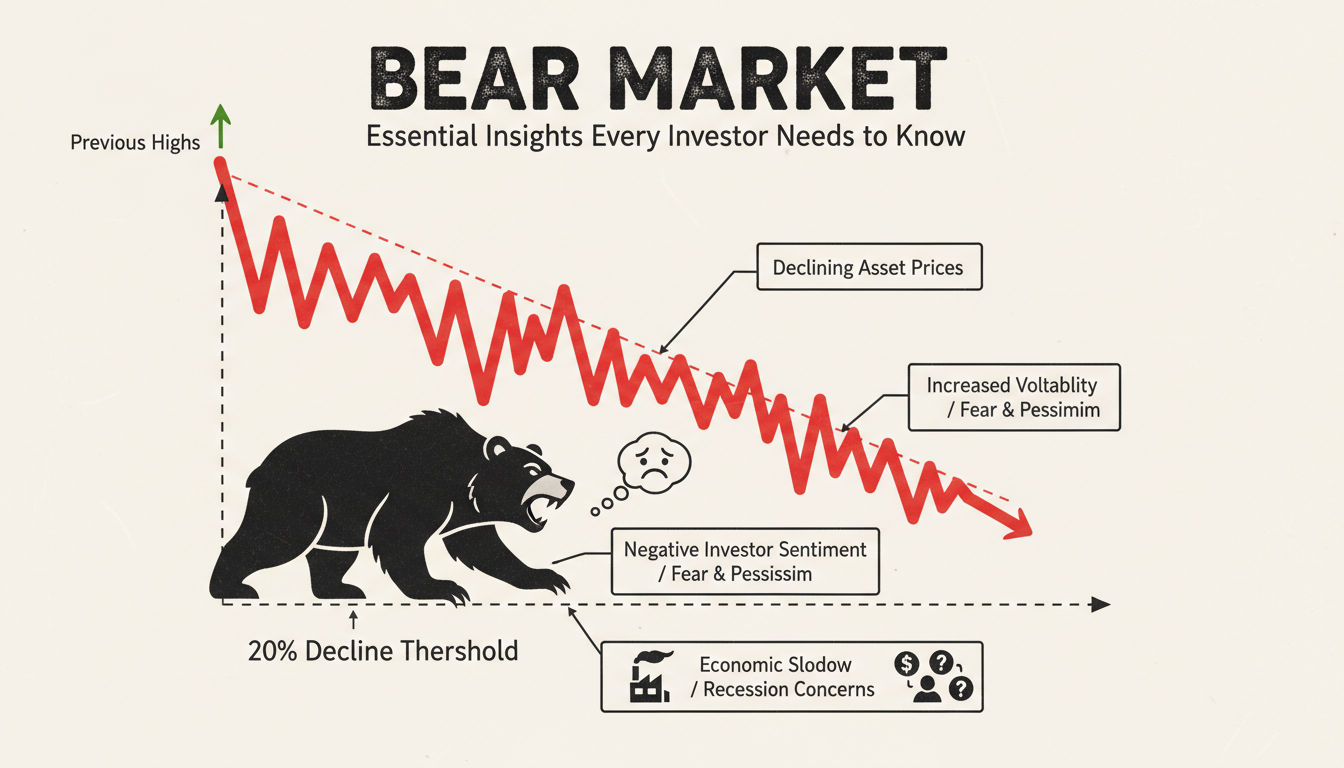
Investors, here’s the update you’ve been waiting for: the bear market is showing signs of bottoming out, with volatility stabilizing and market sentiment cautiously improving. While not a guarantee of a full recovery, this shift suggests a potentially more favorable investment environment is edging into view.
What’s Driving Today’s Bear Market Landscape
Understanding why markets are reacting this way matters. A handful of factors are at play:
- Monetary policy recalibrations: Central banks are dialing back aggressive rate hikes, aiming to temper inflation without stifling growth.
- Corporate resilience: Many companies are exceeding earnings expectations by cutting costs and pursuing new markets.
- Investor psychology: Belief that the worst might be behind us is slowly creeping back in, as downside surprises become less frequent.
Evidence of stabilization appears in metrics like shrinking drawdowns, improving credit spreads, and reduced new lows in breadth indicators. It’s imperfect, tentative—but real.
The Psychology of “Finally, an Update”
Long stretches of decline trigger a mental fatigue among investors. Hearing that markets might be nearing a low does more than help charts—in a sense, it revives risk appetite. Behavioral finance studies show that when investors sense definitiveness in a turn, even if it’s still early, capital starts to trickle back in, especially among institutional players. Granted, there’s still a long road ahead—but this update matters as a shift in tone, not just numbers.
How to Approach Your Portfolio Now
Even in peri-turn bear markets, it’s easy to feel like you should lean in full-steam. A balanced lens helps:
Risk calibration
Consider trimming back overly conservative holdings. Some underweighted cyclical sectors—like industrials or consumer discretionary—are starting to show improving relative strength. Yet, don’t forget hedges like gold or quality bonds. It’s about tilting, not overcommitting.
Tactical re-entry
Dollar-cost averaging into beaten-down sectors, or applying pair trades (buying resilient names vs. shorting weaker ones), can offer smoother exposure without timing the exact low.
Diversification upgrade
This is also a good time to re-evaluate exposure to alternatives—commodities, real estate, or even select private assets—as they often diverge from equity cycles.
Staying nimble
A bear turn isn’t necessarily a straight-line rally. Higher volatility means pacing and flexible rebalancing win over “set-and-forget” positions.
Real-World Signals: What’s Lending Credibility to This Turn?
- Slowdown in inflation: Core prices are easing in several economies—not crashing, but decelerating. That gives central banks room to pause.
- Earnings beats: Amid cautious forecasts, a surprising number of large-cap firms are reporting profits above expectations. That bolsters investor confidence.
- Sentiment reading: Surveys show that while retail investors remain wary, professional fund managers are moderately redeploying capital.
Taken together, these are not golden-paved signs of reversal—but they’re positive, meaningful signals that the floor may be forming.
Expert View: Perspective from the Field
“We’re not out of the woods yet—but the risk/reward is skewing back toward reward. Those who stay disciplined, adapt to volatility and incrementally redeploy are seeing their patience pay off,” notes a global portfolio strategist at a major investment firm.
This approach isn’t about blind optimism—it’s about lean, confident positioning ahead of a potential recovery.
Risks That Still Lurk
Beyond cause for cautious optimism lie some unresolved hazards:
- Geopolitical shocks: Unexpected crises can derail sentiment resets.
- Central bank error: Premature easing could fuel a stubborn inflation loop.
- Earnings disappointment: If the next quarter delivers downgrades, the bounce could stall or reverse.
It pays to keep these in view while staying actively engaged.
Strategy Framework: How to Navigate This “Update”
| Strategic Move | Purpose |
|—————————|———————————————–|
| Incremental reallocation | Smooth exposure to improving market trends |
| Tail hedges | Protect against renewed volatility |
| Active monitoring | Shift with macro or earnings surprises |
| Sectoral scanning | Identify nascent leaders before broad recovery|
This isn’t a list for extremes, but a flexible blueprint for navigators, not gamblers.
Small Story, Big Lesson
Remember when Tom, a mid-career investor, more or less sat on the sidelines after early 2025 losses? He felt a heavy burden of “you missed the bottom.” Once he saw late-2025 volatility drop and semiconductor firms hitting earnings sweet spots, he started redeploying—cautiously, not crazily. Over six weeks, his partial reentries paid off better than timing plunges. That kind of real-life example grounds abstract data in human terms.
Summing It Up: Your Key Takeaways
You’re seeing more than market lines flattening—you’re witnessing a shift in sentiment and fundamentals that could mark a bear market turning point. That’s important. That’s actionable. Yet, it’s not a golden ticket. Balance exposure, stay nimble, monitor risks and be ready to navigate surprises.
FAQs
What does the latest update on the bear market mean for individual investors?
It suggests a stabilization—not a sudden rebound. For individuals, that implies cautiously increasing exposure, especially through paced investments or sector rotation, while still keeping some safety cushions.
How can I tell if the bear market has truly bottomed?
There’s no silver bullet. Watch for sustained easing in volatility, improving earnings reports, and central bank policy shifts. Confirming signals often emerge gradually, not all at once.
Should I completely exit defensive positions now?
Not necessarily. Defensive assets still offer cushion if things wobble again. It’s more about recalibrating—lightening defense subtly, not abandoning it.
How much incremental exposure is reasonable?
That varies by profile, but many adapt by allocating small portions (for example, 5–15%) into cyclical or underweight sectors, then scaling with positive macro or corporate data.
What’s the risk if this update doesn’t hold?
Markets could reverse if inflation stays sticky, earnings disappoint, or global tensions flare. Keeping hedges and avoiding overcommitment help protect against that scenario.
When might this become a clearer bull market?
That typically follows when inflation meaningfully eases, central banks shift decisively dovish, and broad, consistent growth in earnings emerges. That takes time—this update may just be the first subtle bend, not the full arc.

















Leave a comment