



Bitcoin has once again captured headlines, showing its knack for dramatic price swings and sparking fresh debates among analysts, investors, and industry insiders. Between macroeconomic shifts, geopolitical shocks, and the inner workings of corporate treasury strategies, the narrative thrusts the world’s largest cryptocurrency back into focus—though, as usual, with a tinge of unpredictability. This piece aims to untangle recent developments, explore price trends, and unpack what’s really driving the market right now. (Okay, maybe “recent” is a bit of an understatement—there’s a lot going on.)
Market Recovery After a Rough Weekend
Bitcoin recently hovered near the low-$78,000 range following a steep weekend sell-off. After dropping briefly—at times as low as the mid-$75,000s—the price stabilized in the low-$78,000s, signaling tentative resilience . Similarly, another outlet reported a rebound from a dip below $78,000 to around $78,748 by the morning of February 3, 2026 . Such stabilization suggests that buyers are defending a critical range, even if short‑term sentiment remains fragile.
The Fed Effect—Shockwaves from Presidential Picks
Perhaps unsurprisingly, political moves are wielding outsized influence. The nomination of Kevin Warsh—known for hawkish monetary leanings—as the next Federal Reserve Chair rattled crypto markets. Bitcoin dropped toward a 10‑month low near $74,553 before rebounding to around $78,700 . Warsh’s nomination stoked fears of tighter policy and a stronger dollar, which typically dim enthusiasm for riskier assets like crypto . Yet this fall was partially offset by a modest dollar pullback, allowing Bitcoin room to bounce .
Corporate Holders Under Pressure
Looking beyond price charts, major Bitcoin holders are facing heightened scrutiny. Strategy, formerly known as MicroStrategy and led by Michael Saylor, saw its Bitcoin holdings briefly go underwater. Despite accumulating over 713,000 BTC at an average cost of about $76,052, the company’s recent buys at nearly $87,974 temporarily pushed valuations into the red before a modest price recovery to $77,500+ .
The ripple effects on Strategy’s stock were notable: a sharp decline estimated at 6.4%, pushing shares toward a multi-month low and reflecting the broader consequences of volatility on leveraged crypto proxies .
A Strategy in the Crosshairs
It’s not just about paper losses. Critics argue the big-crypto-holder strategy is unraveling under market duress. Companies like Strategy and BitMine, which heavily relied on treasury-stashing digital assets, now report massive unrealized losses—tens of billions in the case of both firms—threatening investor trust and long-term viability . This unfolding scenario underscores one reality: when bitcoin bleeds, these entities can bleed worse.
Bearish Outlooks and Potential Downside
The term “crypto winter” has been resurrected enthusiastically—especially since Bitcoin’s drop of roughly 37% from its October peak (~$126,000) into a sustained bearish phase . John Blank of Zacks Investment Research warns that the downturn could go much deeper, potentially halving again to roughly $40,000 based on historical cycles, liquidity concerns, and potential forced selling by big holders like Strategy .
Yet, it’s important to note that not all analysts see the floor slipping away. Some believe Bitcoin is flirting with a value zone and could bounce back—especially if macro indicators shift or institutional sentiment improves .
“Bitcoin may be flirting with a value zone, but structural stresses and waning liquidity suggest risks are far from passé.”
Macroeconomic and Market Sentiment Drivers
Beyond crypto-specific triggers, broader economic forces are at play. Government shifts, tariff stigmas reminiscent of the 2025 trade shock, and political uncertainty continue to weigh heavily on sentiment—revealing that Bitcoin is far from the safe haven some once thought. Indeed, analysts suggest the “digital gold” narrative is fraying, as Bitcoin increasingly correlates with speculative risk rather than acting as a hedge .
Here’s a quick snapshot:
- Geographic and policy instability raise risk-off sentiment.
- Liquidations—in the billions—underscore shaky market depth .
- A stronger dollar, underpinned by hawkish Fed expectations, exerts downward pressure .
The Technical View: Support and Resistance
Multiple sources point to key technical levels:
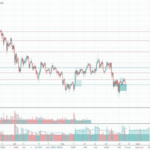
- Support: Strong zones around $72,000–$76,000—breaching these may invite further downside .
- Resistance: The $78,000–$80,000 range remains critical. Breaking through could inject bullish momentum. Right now, Bitcoin seems boxed in below these thresholds .
Combined with RSI and EMA signals hinting at oversold conditions, a relief rally isn’t off the table—but it’s contingent on macro stabilization and renewed buying interest .
Real‑World Example: Strategy’s Risk Exposure
Imagine a company whose core value hinges on a volatile asset—and then that asset slips just below its average purchase price. That’s Strategy’s predicament. This scenario exposes fragility in using public companies as proxy vehicles for crypto exposure. Unlike HODLers, these firms face debt obligations, balance‑sheet pressure, and tangible investor scrutiny—raising important questions about long-term sustainability.
Conclusion
Bitcoin is navigating a turbulent patch. Recent weeks have seen sharp declines, fleeting rebounds, and heightened global uncertainty. Key price levels—namely support near $72,000–$76,000 and resistance around $78,000–$80,000—are acting as gatekeepers for the next move. Market sentiment remains fragile as geopolitical developments and Fed policies continue to sway investor appetite. Large holders like Strategy are under the microscope, bringing to light the precarious nature of leveraged crypto exposure. Whether Bitcoin bounces back or slides lower hinges on liquidity, policy clarity, and investor confidence.
FAQs
Q: What caused Bitcoin’s recent drop to a 10-month low?
A combination of President Trump’s Fed chair nomination of Kevin Warsh and resulting investor fears of tighter monetary policy triggered a sell-off that pushed Bitcoin briefly below $75,000, before a partial recovery thereafter.
Q: Why is Michael Saylor’s Strategy company important to Bitcoin’s outlook?
Strategy is the largest publicly traded institutional holder of Bitcoin. Its debt structure and large BTC exposure mean that price drops can significantly affect market sentiment and liquidity dynamics.
Q: Could Bitcoin really fall to $40,000?
Some analysts, notably from Zacks Investment Research, argue historical downtrends and potential forced selloffs could lead to a near 50% drop. Yet others caution that Bitcoin is near a value zone and may stabilize if broader risk appetite returns.
Q: How is Bitcoin behaving compared to traditional safe havens?
Bitcoin’s role as a “digital gold” is deteriorating; recent behavior shows it more as a speculative asset, often moving in tandem with broader risk trends rather than offering defensive insulation.
Q: What technical levels are key to watch?
Watch for support between $72,000–$76,000 and resistance at $78,000–$80,000. A move above resistance could signal a rally, whereas slipping below support may usher in further declines.
Q: What’s next for Bitcoin?
Future direction depends on macroeconomic developments—including Fed signals, dollar strength, and geopolitical factors—as well as sentiment among institutional players and actual buying volumes around key technical levels.
Riding Bitcoin feels a bit like riding a rollercoaster—thrilling, unpredictable, and always compelling.


















Leave a comment