


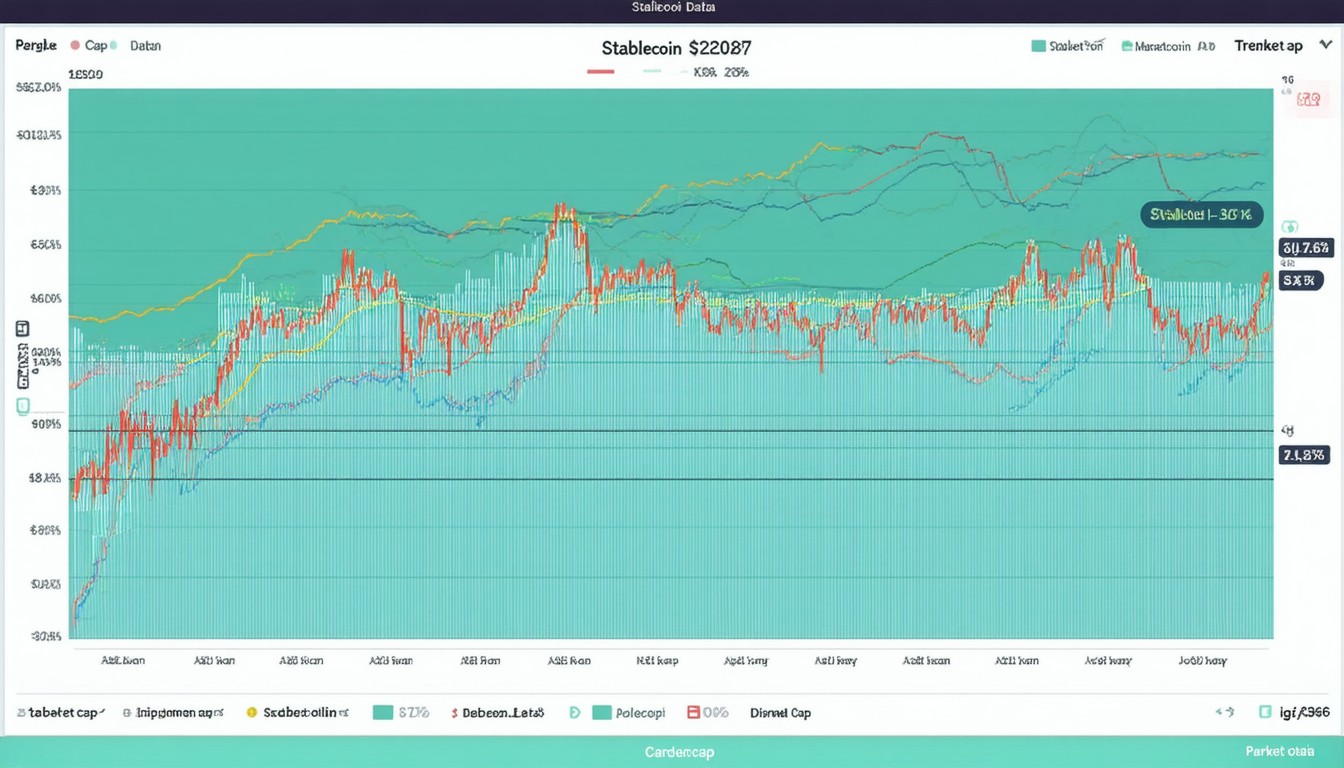
The stablecoin market cap has become a barometer for stability and liquidity within the cryptocurrency ecosystem. Unlike volatile digital assets, stablecoins are designed to maintain a constant value, typically pegged to the US dollar or another stable asset. This unique position allows them to serve as both a gateway for new users and a backbone for decentralized finance (DeFi) applications. In recent years, sweeping shifts in user adoption, regulatory attention, and institutional interest have all been reflected in the rapidly evolving size and makeup of the stablecoin market cap.
Stablecoin Market Cap: Current Landscape
The overall market capitalization of stablecoins has grown dramatically since the sector’s inception. Across the last half-decade, the rise of USDT (Tether), USDC (USD Coin), and newer entrants like DAI and BUSD has transformed stablecoins from niche products to systemically important financial instruments on blockchain networks.
Market Cap Milestones and Leading Players
The stablecoin market cap reached an early milestone in 2020, surpassing the $10 billion mark. By 2022, the cumulative value peaked well above $150 billion during the broader crypto market’s bullish period. These numbers underscore not just investor demand but also the increasing use of stablecoins as collateral, trading pairs, and means of cross-border settlement.
- USDT (Tether): As the dominant stablecoin by market cap, Tether frequently accounts for more than half the sector’s total value. Its deep liquidity and global reach make it the default asset for many exchanges.
- USDC (USD Coin): Issued by regulated US firms, USDC’s transparency and regulatory compliance have fueled adoption among institutional and DeFi users.
- DAI: Unlike centralized rivals, DAI leverages on-chain collateralization for decentralization, appealing to privacy-focused and DeFi-native communities.
Beyond the Big Names
Smaller players like Pax Dollar (USDP), TrueUSD (TUSD), and algorithmic stablecoins contribute to sector diversity. The landscape is also shifting as new chain-specific stablecoins—such as FRAX on Ethereum or UST on Terra (prior to its collapse)—bring innovation and, occasionally, new risks.
“Stablecoin market cap movements are more than just numbers; they are a reflection of trust, liquidity, and evolving utility in digital finance,” notes Clara Medina, head of digital assets research at a leading fintech analytics firm.
Key Trends Shaping the Stablecoin Market Cap
Analyzing the growth and composition of stablecoin market cap reveals several underlying trends that are redefining the role of these assets in global finance.
Expansion of Use Cases
Originally intended as a haven from crypto volatility, stablecoins now underpin billions of dollars in daily transactions. Decentralized finance (DeFi) protocols use them for lending, borrowing, and yield farming. Remittance platforms leverage stablecoins for efficient cross-border payments, especially in regions with unstable local currencies.
Regulatory Clarity and Challenges
With the scale of stablecoins growing, regulators worldwide have begun to scrutinize their reserve practices and systemic risks. Recent guidance from the U.S. Treasury and the European Union’s Markets in Crypto-Assets (MiCA) regulation are steps toward integrating stablecoins into the broader financial regulatory framework. However, compliance pressures can impact both market cap and stablecoin innovation—driving some issuers toward stricter transparency or new jurisdictions.
Peg Stability and Crisis Response
Maintaining the peg is fundamental to stablecoin utility—and market confidence. The implosion of algorithmic stablecoins, most notably TerraUSD (UST), resulted in billions of dollars in lost value, shaking faith in certain models and temporarily contracting the total stablecoin market cap. In this aftermath, investor focus shifted even more sharply toward collateral quality, audit transparency, and robust risk management.
Institutional and Corporate Adoption
Large companies and fintechs are experimenting with stablecoin solutions to optimize treasury management, payment rails, and global settlements. Notably, PayPal’s launch of its own stablecoin, PYUSD, marked a significant signal of mainstream adoption, validating the long-term strategic importance of stablecoins in digital payments.
Analyzing Market Cap Fluctuations: Drivers and Dynamics
Tracking changes in the stablecoin market cap is not merely an exercise in data visualization. Several core drivers help explain why the market grows or contracts at different times.
Bull vs. Bear Markets: Liquidity and Safe Havens
During periods of crypto market uncertainty, investors frequently convert volatile tokens into stablecoins, which swells the overall market cap as funds “sit on the sidelines” seeking safety. Conversely, during bullish periods, users may convert out of stablecoins and into high-growth assets, reducing the market cap share of dollar-pegged coins.
Ecosystem Integrations and Blockchain Growth
The integration of stablecoins across a widening range of blockchains—such as Ethereum, Solana, Tron, and Binance Smart Chain—directly correlates with market cap expansion. High-throughput chains with low transaction fees, like Tron, have seen stablecoin volumes surge, propelled by exchanges and international payment corridors.
Regulatory Actions and Market Confidence
Announcements from regulators, audits by respected firms, and issuer transparency reports can impact not just a single stablecoin, but the sentiment—and market cap—for the entire sector. A negative report might shrink cap due to redemption waves, while greater clarity or new product launches often prompt inflows.
Future Outlook: What’s Next for Stablecoin Market Cap?
Looking ahead, several forces could further reshape the stablecoin market cap:
- Rising Global Remittance Demand: Economic instability in some emerging markets has fueled adoption of USD-denominated stablecoins as a hedge against local currency devaluation.
- Programmable Money in Enterprise: Corporations are exploring programmable payments and on-chain treasury solutions using stablecoins, presenting a potential springboard for market cap growth.
- Integration with Central Bank Digital Currencies (CBDCs): As more governments explore digital fiat projects, stablecoin issuers may find new opportunities—or face stiffer competition.
- Innovations in Collateralization: Hybrid designs that blend fiat reserves with crypto collateral or algorithmic controls are emerging to boost both efficiency and stability.
Conclusion: Navigating a Dynamic Financial Frontier
The stablecoin market cap is far more than a snapshot of value—it signals the health, trust, and utility of digital finance worldwide. As new challenges arise, from regulatory headwinds to technical failures, the sector has proven resilient, with users and issuers increasingly focused on transparency, utility, and risk management. For investors, builders, and regulators alike, tracking shifts in market cap provides vital insights into the evolving landscape of stable, digital money.
FAQs
What is the stablecoin market cap?
The stablecoin market cap refers to the total value of all stablecoins in circulation, calculated as the sum of their individual market capitalizations. It provides a snapshot of the sector’s size and its role within the broader crypto economy.
Why do stablecoin market caps fluctuate?
Fluctuations often reflect shifts in demand for dollar-pegged safety during market volatility, regulatory news, integration with new blockchains, or investor sentiment about reserve quality and transparency.
Which stablecoins dominate the market cap rankings?
Tether (USDT) and USD Coin (USDC) usually top the rankings, with DAI and BUSD also commanding significant shares. New entrants occasionally disrupt the leaderboard, but the largest stablecoins maintain deep liquidity and widespread acceptance.
How do regulations impact stablecoin market cap?
Regulatory clarity can encourage inflows and innovation, while uncertainty or stricter rules sometimes prompt redemptions or closure of certain stablecoin products, directly affecting their market cap.
What risks are associated with stablecoins?
Risks include de-pegging events (price instability), poor transparency around reserves, regulatory crackdowns, and smart contract vulnerabilities in decentralized stablecoins.
How does the growth of DeFi affect stablecoin market cap?
DeFi’s reliance on stablecoins for lending, yield farming, and liquidity has been a major driver of stablecoin market cap expansion, especially during periods of rapid innovation and user adoption.





















Leave a comment